

What is a Debt to Income Ratio
When it comes to getting a mortgage, many people think their credit score is the most important number associated with their name. While a person’s credit score is important, along with how much money they have saved, there’s another number that is just as important, debt-to-income (DTI) ratio.
 A DTI ratio is one of the ways lenders measure your ability to make payments for the money you’ve borrowed. Your DTI ratio is expressed as a percentage and is your total minimum monthly debt divided by your gross monthly income. Your total minimum monthly debt is made up of your minimum monthly auto loan payments, car loans, student loans, credit card debt, home equity loans, mortgages, and any other recurring debt you might have.
Two kinds of DTI
There are two types of debt-to-income ratios related to mortgages; front-end ratio, and back-end ratio.
A front-end ratio is the percentage of your income that would be devoted to housing costs. When a lender is determining whether they will offer you a loan at a given amount, they will take your gross income, multiply it by their required front-end ratio and come up with a total. This total will be the amount you can pay toward housing, and they may not award you a loan that would exceed this amount.
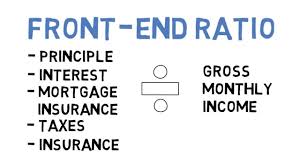 The lender will also multiply your gross income by the back-end ratio, which is a higher figure. The back-end ratio is higher because it includes your housing expenses along with all other debts. So, this includes the front-end and everything else, like credit cards and student loans. Again, this calculation will return a dollar figure, and your total debt commitments should not exceed it.

Calculating Debt-to-Income Ratio
When you apply for a mortgage, it’s important that you know your DTI. To calculate it, you must take into account all of your monthly debt payments and divide the total by your gross monthly income (the amount of money you earn before taxes).

For example, if you pay $1,500 a month for your mortgage, $100 a month for an auto loan and $400 a month for the rest of your debts, you pay a total of $2,000 per month toward debts. If your gross monthly income is $6,000, then your DTI ratio is 33%.
A low DTI shows you have a good balance between your debt and your income. The lenders like this number to be low, generally you’ll want to keep it below 36, but the lower it is, the greater the chance you will be able to get the loans or credit you seek.
What is a good DTI?
If your DTI ratio is low, then you are more likely to have the income necessary to repay your debts. If your DTI ratio is high, then you may be overwhelmed by debt and unable to pay back new debt obligations.
The standard rule of thumb is that your DTI ratio should be less than 36 percent. A DTI ratio of 36 percent could cause you to pay a higher interest rate or denied outright. A DTI ratio of 43 percent is important to keep in mind because the Consumer Financial Protection Bureau has indicated that 43 percent is the highest debt-to-income ratio a consumer can have while still being eligible for a Qualified Mortgage.
The following guidelines are how the lenders review it when they are considering your application.

35% or less: Looking Good. When compared to your income, your debt is at a manageable level.
You most likely have money left over for saving or spending after you’ve paid your bills. Lenders view a lower DTI as favorable.
36% to 49%: Opportunity to improve.
You are managing your debt adequately, but you may want to consider lowering your DTI which could put you in a better position to handle unforeseen expenses. If you are looking to borrow, keep in mind that lenders may ask additional eligibility criteria.
50% or More: Take action. You may have limited funds to save or spend
With more than half your income going toward debt payments, you may not have much left to save, spend, or handle unforeseen expenses. With high DTI ratio lenders may limit your borrowing options.
If you find this article helpful, please leave a comment. Thank you.